
Unearthing the history behind words and phrases
I’ve always been in love with reading.
In love with words.
And in reading about words.
The history. The background. The etymology of words.
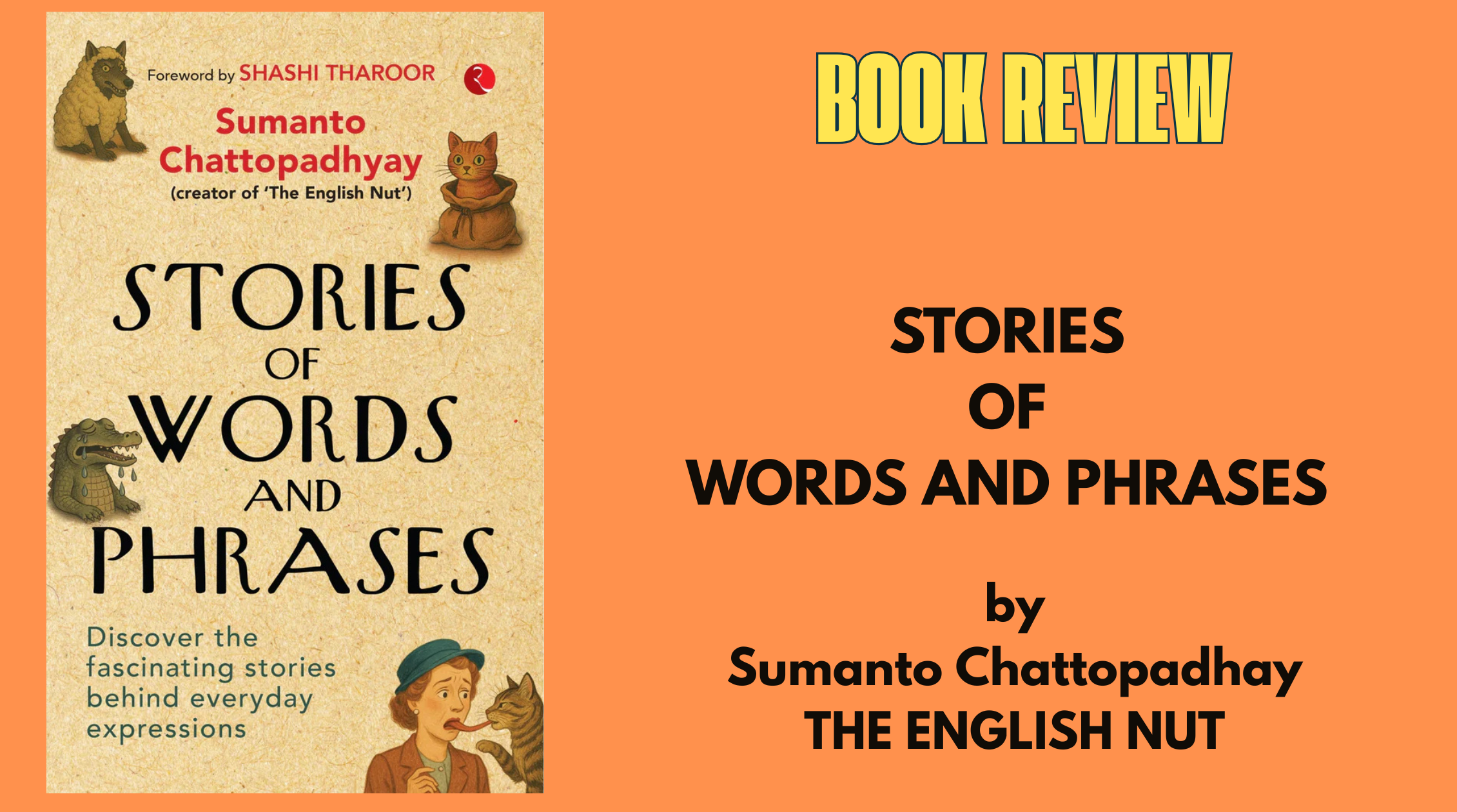
And so, I was delighted when someone I know personally (hello Bragging Rights!) published a book on all that I hold dear. Stories of Words and Phrases by Sumanto Chattopadhyay brings all that together in a wonderfully intriguing, interesting and insightful way.

But first: a bit about Sumanto and how I know him.
In the advertising world, Sumanto’s reputation precedes him. An industry veteran and a fellow Ogilvian (and here I bask in reflected glory!) Sumanto is one of the most awarded Creative Directors with countless international and national awards to his name. That said, Sumanto remains down-to-earth and humble.
In his own words, Sumanto Chattopadhyay, better known as The English Nut, chats up words like old friends with scandalous pasts. He’s an adman, actor and author of Stories of Words and Phrases, proving that etymology can be as thrilling as detective fiction—only with fewer dead bodies and better grammar.
(Pssst! I love the dead bodies reference. Hell hath no fury like a creative director whose word choice is questioned!)
I can well understand Sumanto’s love for words. Being from the ‘writing’ side in advertising, we copywriters not only agonize over our choice of words but sometimes go down the rabbit hole to see which word is more appropriate, and why.
And that’s what’s special about Sumanto’s book, Stories of Words and Phrases. It brings so much together in a wonderfully intriguing, interesting and insightful way. His familiarity with word choices, his extensive knowledge and his devotion to the craft make this book a logical outcome.
Sounds like an easy job, but that’s not it. When I did get my hands on the book (and got it subsequently signed by him) I was struck by the breadth of words and phrases covered and the astounding depth of research. It surely is a labour of love, making it an endearing collectors’ item to have, a book that you can open on any page, on any day, and come away a delightfully surprised and hopefully a wee bit wiser.
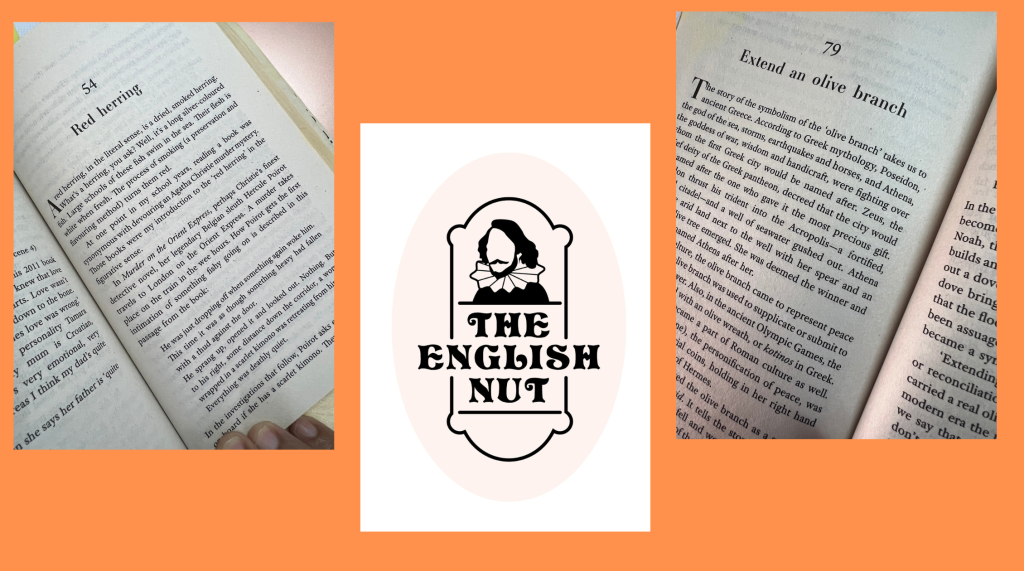
For instance, did you know that the word sinister came from a relatively innocuous, originally-Latin word like sinistra which means ‘left’ (as in right and left?). Didn’t know that? Or ‘cat got your tongue’? That phrase had something to do with Egyptians. (Discover it for yourself!) And thinking of the sands of Egypt, here’s a no-brainer word for association – do you know the origins of the word ‘khaki’? Yes? No? Keep guessing.
Stories of Words and Phrases captivates you from start to finish. Each word or phrase takes you down the cobbled stones of history, and yet it is not pedantic or preachy. You get lost into the by-lanes of language chronicles: meandering through the English countryside, or stumbling onto the Shakespearean stage, strolling through the passages of Rome or climbing the high rocks of Sardinia. The eye-opening discoveries never stop.
Sumanto, also widely known on his social media platforms as The English Nut, has not stopped at the book. His Instagram handle, and his LinkedIn and YouTube feeds keep the history updated with newer words and phrases that he continues to pull apart and put together. Some of these are even suggested by his followers who are now swept up in this wave of stories of words and phrases.
“Our words are living museums”, said Sumanto recently at the Alipore Museum Kolkata. And his book is a demonstration of that.
Order yours today.
You’ll not look at words the same way again.
Links
https://www.linkedin.com/in/sumanto-chattopadhyay-827442182/http://www.youtube.com/c/TheEnglishNut
